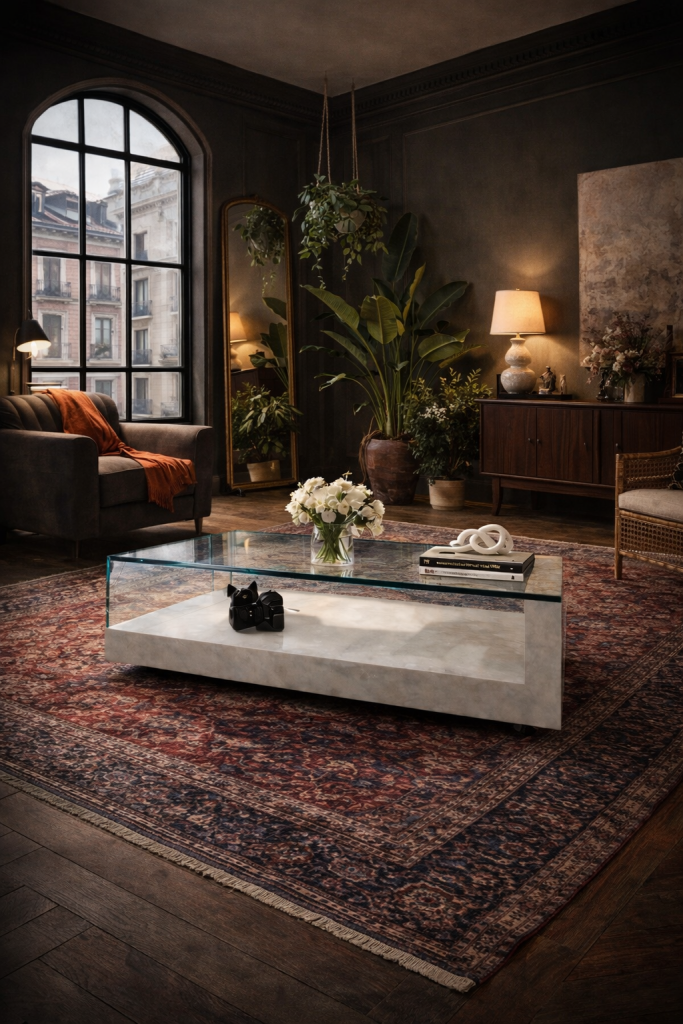
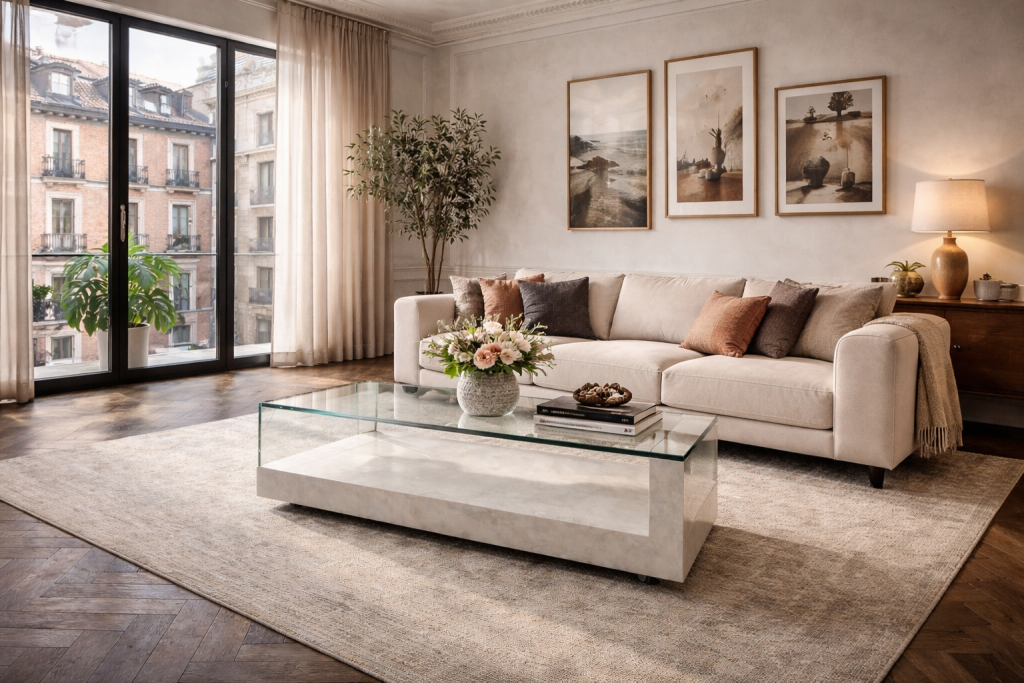
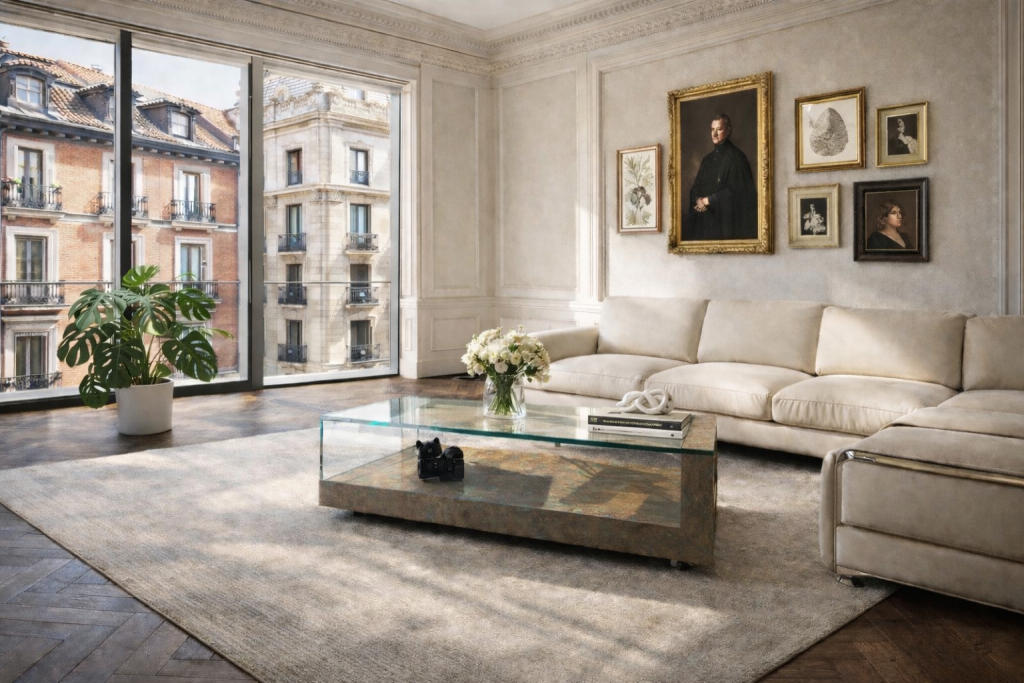
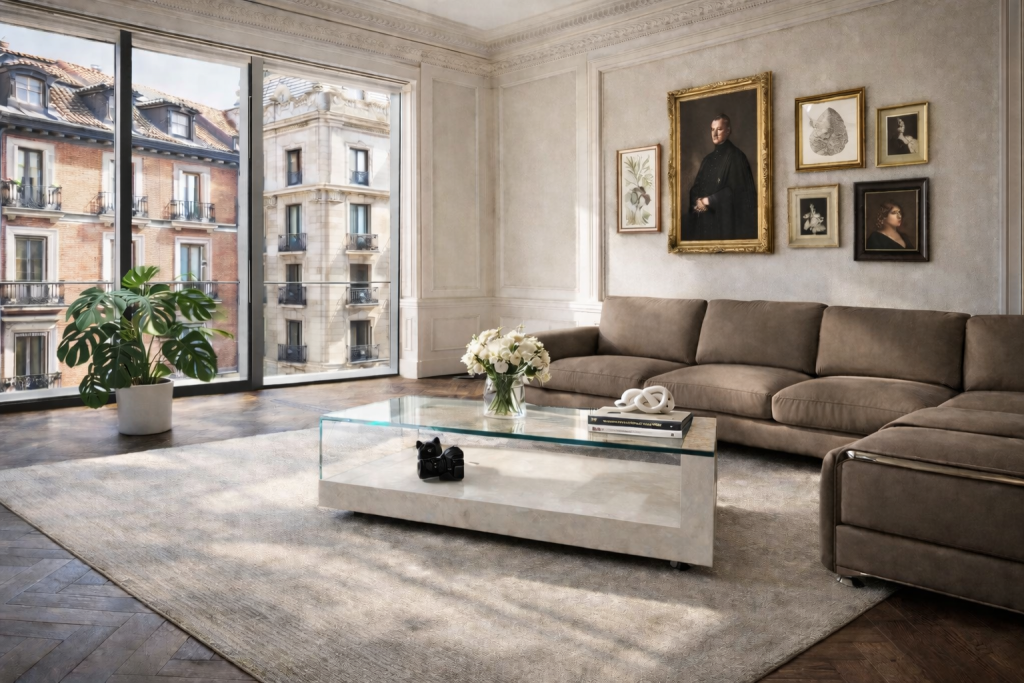
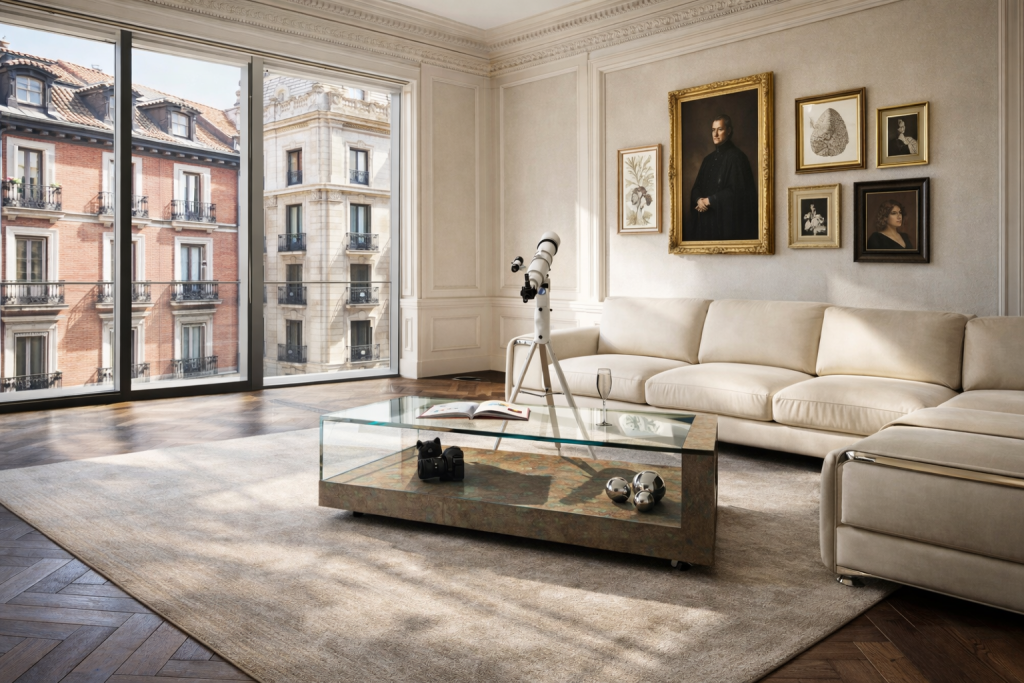
Meddel’s Fornix table is born from the serene dialogue between matter and emptiness, between the strength of the earth and the lightness of light. In it, marble and glass do not compete: they listen to each other, balance each other, complement each other. One provides roots, geological memory, tangible presence; the other, transparency, respite, and visual silence. The result is a piece that not only occupies a place in the living room but also creates an atmosphere. Fornix is balance turned into an object, a pause where the gaze can rest and, at the same time, discover new nuances with each change of light.
Designed by Joaquín Moll, this table embodies an understanding of design as an exercise in sensitivity and proportion. Every line has been carefully considered so that the structure appears sturdy yet light, sculptural yet functional. There are no unnecessary gestures: only the precision of someone who knows that true elegance lies in restraint. The stone base supports the transparent top as if it were floating, creating a subtle aesthetic tension that transforms an everyday gesture—placing a book, a cup, a bouquet of flowers—into a small domestic ceremony.
Fornix is also a celebration of craftsmanship. Made entirely in Spain, each table passes through the hands of experts who understand the value of time and detail. Here, production is not rushed, but careful; it is not automatic repetition, but knowledge passed down. The veins of the marble are respected as unique traces of nature, and the glass is worked to achieve a visual purity that enhances light and space. Thus, each piece is unique, bearing its own identity.
Choosing a piece of furniture like Fornix is also a statement of style and taste. It means opting for objects that don’t scream, but remain; that don’t follow passing fads, but dialogue with time. In a home, furniture is more than just functional: it is part of the everyday landscape, the backdrop to life as it unfolds. A table like this organizes the space without imposing itself, adds character without overwhelming, and allows other elements (textiles, art, mementos) to find their place naturally.
Ultimately, Fornix speaks of beauty, art, and design’s ability to improve our relationship with everyday life. It is a reminder that fine materials, when combined with intention and respect, can generate subtle but profound emotions. In its balance between weight and lightness, between opacity and transparency, the table invites us to live surrounded by objects that are not only used, but also contemplated, felt, and integrated into the intimate history of the home.
Meddel’s Fornix table is born from the serene dialogue between matter and emptiness, between the strength of the earth and the lightness of light. In it, marble and glass do not compete: they listen to each other, balance each other, complement each other. One provides roots, geological memory, tangible presence; the other, transparency, respite, and visual silence. The result is a piece that not only occupies a place in the living room but also creates an atmosphere. Fornix is balance turned into an object, a pause where the gaze can rest and, at the same time, discover new nuances with each change of light.
Designed by Joaquín Moll, this table embodies an understanding of design as an exercise in sensitivity and proportion. Every line has been carefully considered so that the structure appears sturdy yet light, sculptural yet functional. There are no unnecessary gestures: only the precision of someone who knows that true elegance lies in restraint. The stone base supports the transparent top as if it were floating, creating a subtle aesthetic tension that transforms an everyday gesture—placing a book, a cup, a bouquet of flowers—into a small domestic ceremony.
Fornix is also a celebration of craftsmanship. Made entirely in Spain, each table passes through the hands of experts who understand the value of time and detail. Here, production is not rushed, but careful; it is not automatic repetition, but knowledge passed down. The veins of the marble are respected as unique traces of nature, and the glass is worked to achieve a visual purity that enhances light and space. Thus, each piece is unique, bearing its own identity.
Choosing a piece of furniture like Fornix is also a statement of style and taste. It means opting for objects that don’t scream, but remain; that don’t follow passing fads, but dialogue with time. In a home, furniture is more than just functional: it is part of the everyday landscape, the backdrop to life as it unfolds. A table like this organizes the space without imposing itself, adds character without overwhelming, and allows other elements (textiles, art, mementos) to find their place naturally.
Ultimately, Fornix speaks of beauty, art, and design’s ability to improve our relationship with everyday life. It is a reminder that fine materials, when combined with intention and respect, can generate subtle but profound emotions. In its balance between weight and lightness, between opacity and transparency, the table invites us to live surrounded by objects that are not only used, but also contemplated, felt, and integrated into the intimate history of the home.