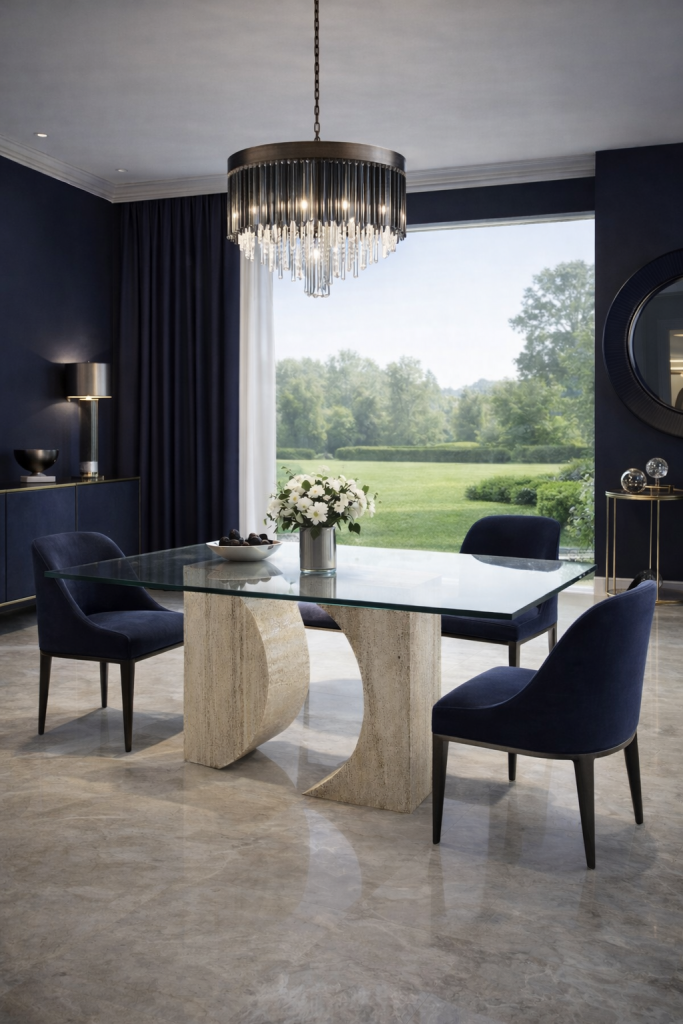
The Balma dining table is a sculptural piece designed to transform the space into an immersive aesthetic experience. More than just a functional piece of furniture, Balma is a small-scale architectural work, where the balance between mass and void creates an imposing yet refined presence. Designed for interiors that seek character, sophistication, and a strong identity, this table turns the dining room into the true heart of the home. Its formal language combines curved lines and bold volumes that interact with the light and the surroundings, generating different perceptions depending on the viewpoint. Balma not only integrates into the space: it redefines it with timeless elegance and unmistakable personality.
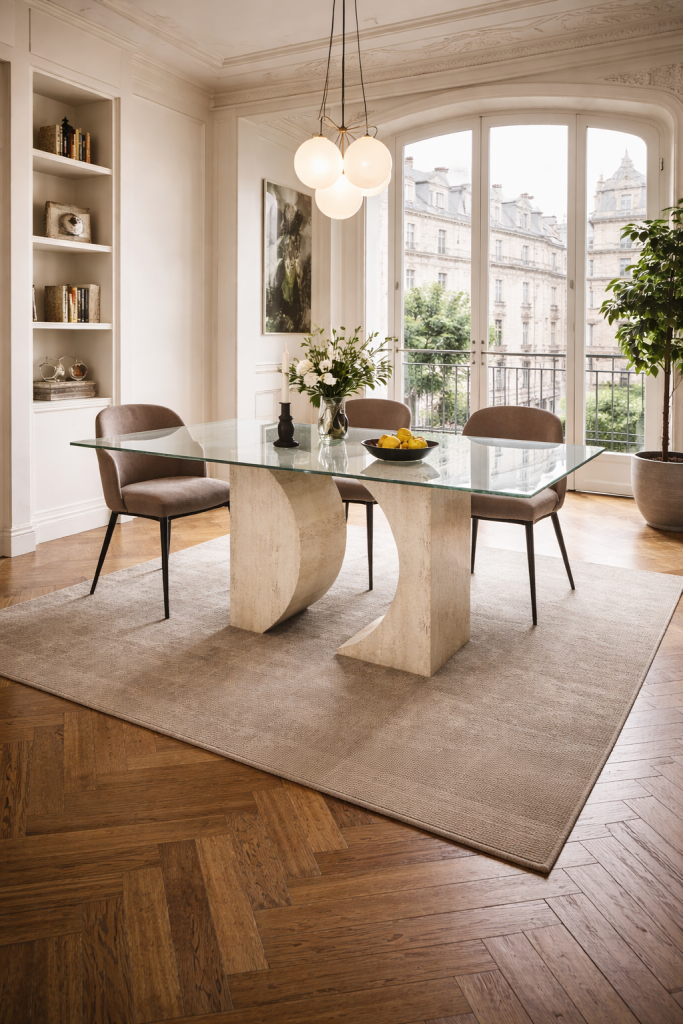
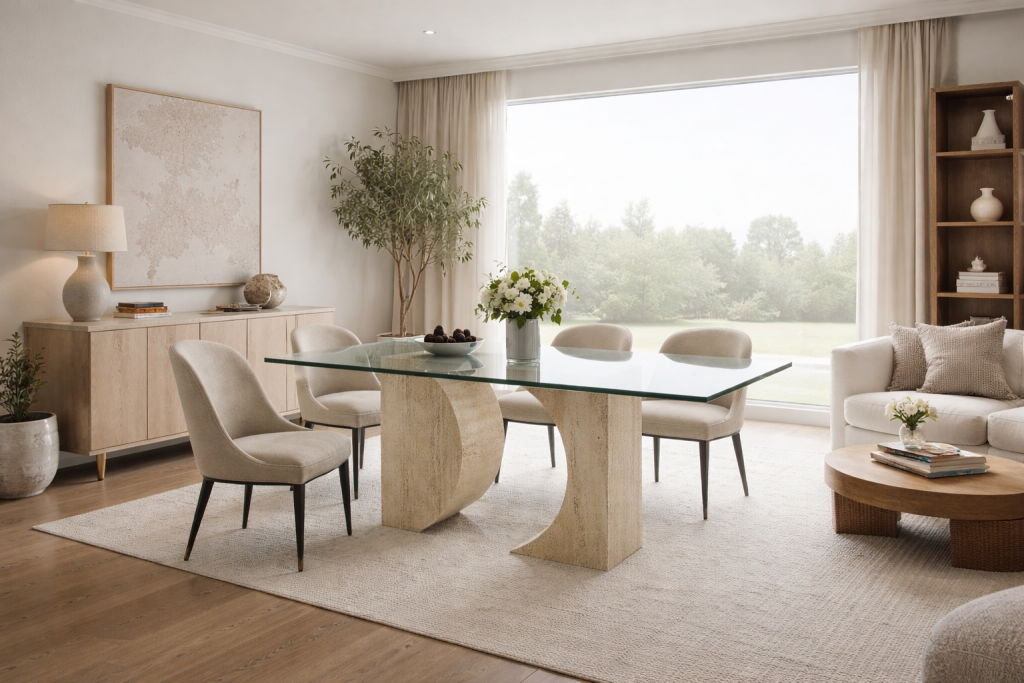
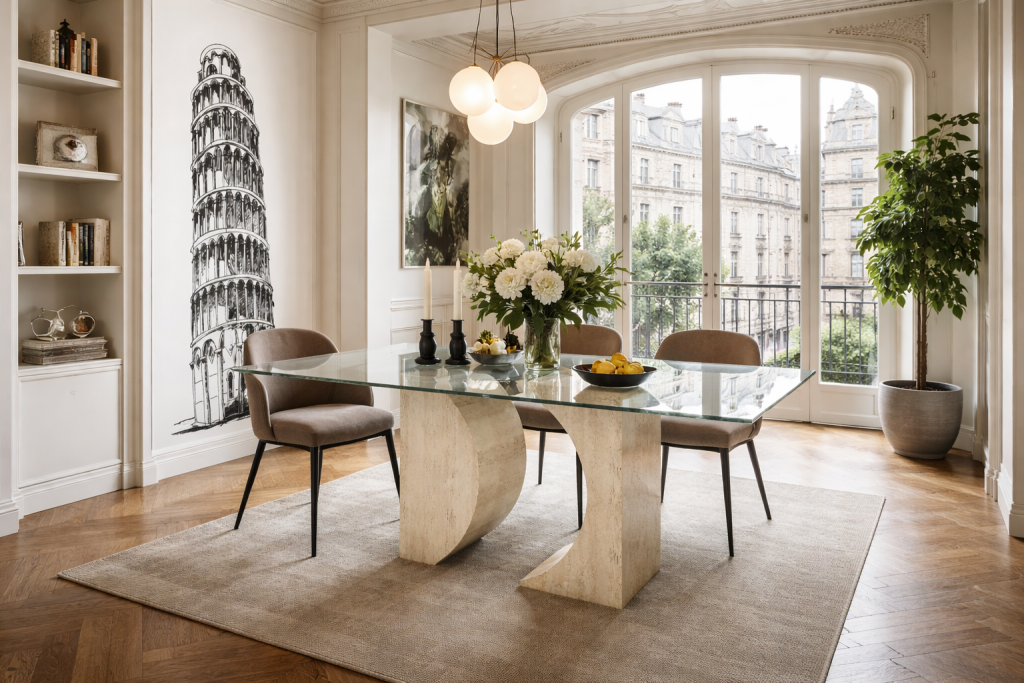
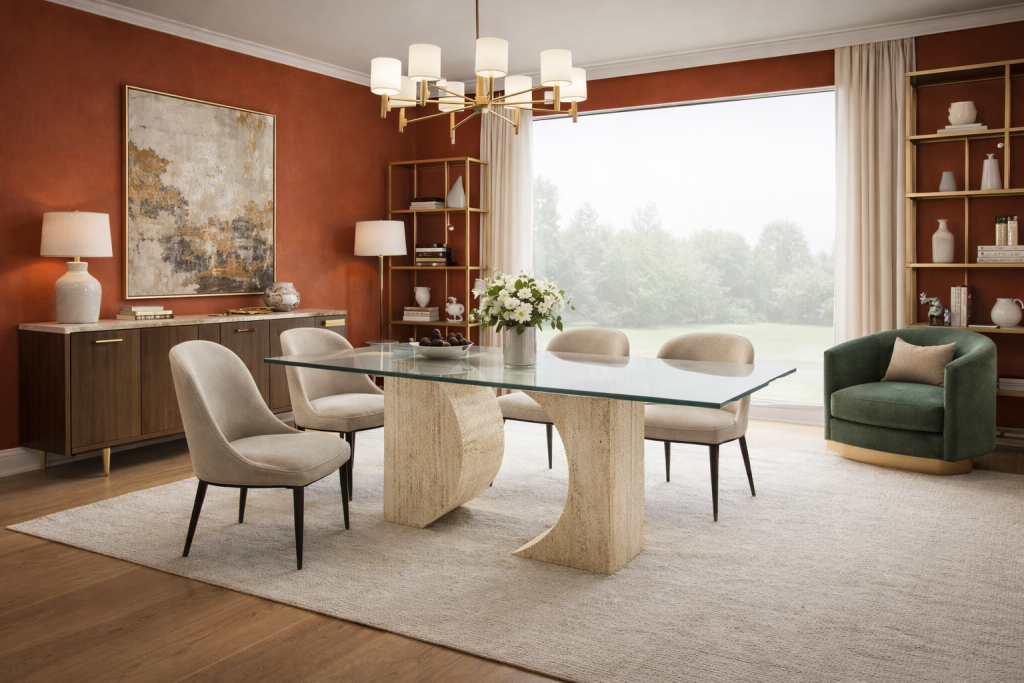
The most distinctive feature of the Balma table lies in its two travertine marble bases, designed as complementary volumes. One takes the form of a “D,” while the other is shaped like a “C” or crescent. These two curved geometries face and accompany each other, creating a dynamic formal dialogue. The complementarity of the two pieces generates a sense of organic balance, as if they were two elements that seek and complete each other. This volumetric interaction provides visual movement and makes the base the protagonist of the design. From any angle, the composition reveals new perspectives, highlighting the sculptural richness of the piece.
The use of travertine marble gives the Balma table a unique texture and unmatched natural warmth. This material, prized since ancient times for its strength and beauty, features veins and nuances that make each piece one of a kind. Its soft tone allows the table to blend into minimalist spaces as well as more classic or Mediterranean settings reinterpreted with a contemporary approach. The surface of the travertine interacts with natural light, creating subtle shadows in its pores and cavities that enrich the visual perception of the whole. Thus, the material is not only structure, but also artistic and sensory expression.
Despite the visual impact of the marble, the bases of the Balma table are hollow, a technical detail that significantly reduces the total weight of the piece without compromising its stability. This structural solution demonstrates an intelligent design concept, where aesthetics and functionality are coherently integrated. By emptying the interior of the volumes, transport and installation are made easier, and the overall balance of the table is optimized. This interplay between solid appearance and actual lightness reinforces the idea of contrast that defines Balma: visual solidity with refined engineering.
The Balma table is a style statement designed for interior design projects that value sculptural beauty and excellence in materials. Its geometric composition, based on complementary curved volumes, brings dynamism without losing harmony. It is a piece that can coexist with contemporary design chairs or more organic proposals, adapting to different decorative styles. In short, Balma represents the perfect union between art and functionality, a table that celebrates the nobility of natural stone and turns the everyday act of gathering around it into a sophisticated and memorable aesthetic experience.
The Balma dining table is a sculptural piece designed to transform the space into an immersive aesthetic experience. More than just a functional piece of furniture, Balma is a small-scale architectural work, where the balance between mass and void creates an imposing yet refined presence. Designed for interiors that seek character, sophistication, and a strong identity, this table turns the dining room into the true heart of the home. Its formal language combines curved lines and bold volumes that interact with the light and the surroundings, generating different perceptions depending on the viewpoint. Balma not only integrates into the space: it redefines it with timeless elegance and unmistakable personality.
The most distinctive feature of the Balma table lies in its two travertine marble bases, designed as complementary volumes. One takes the form of a “D,” while the other is shaped like a “C” or crescent. These two curved geometries face and accompany each other, creating a dynamic formal dialogue. The complementarity of the two pieces generates a sense of organic balance, as if they were two elements that seek and complete each other. This volumetric interaction provides visual movement and makes the base the protagonist of the design. From any angle, the composition reveals new perspectives, highlighting the sculptural richness of the piece.
The use of travertine marble gives the Balma table a unique texture and unmatched natural warmth. This material, prized since ancient times for its strength and beauty, features veins and nuances that make each piece one of a kind. Its soft tone allows the table to blend into minimalist spaces as well as more classic or Mediterranean settings reinterpreted with a contemporary approach. The surface of the travertine interacts with natural light, creating subtle shadows in its pores and cavities that enrich the visual perception of the whole. Thus, the material is not only structure, but also artistic and sensory expression.
Despite the visual impact of the marble, the bases of the Balma table are hollow, a technical detail that significantly reduces the total weight of the piece without compromising its stability. This structural solution demonstrates an intelligent design concept, where aesthetics and functionality are coherently integrated. By emptying the interior of the volumes, transport and installation are made easier, and the overall balance of the table is optimized. This interplay between solid appearance and actual lightness reinforces the idea of contrast that defines Balma: visual solidity with refined engineering.
The Balma table is a style statement designed for interior design projects that value sculptural beauty and excellence in materials. Its geometric composition, based on complementary curved volumes, brings dynamism without losing harmony. It is a piece that can coexist with contemporary design chairs or more organic proposals, adapting to different decorative styles. In short, Balma represents the perfect union between art and functionality, a table that celebrates the nobility of natural stone and turns the everyday act of gathering around it into a sophisticated and memorable aesthetic experience.